Loading...
The Healf Source
Vagus Nerve Stimulation: The Ultimate Guide
Feeling anxious, run-down, or stuck in “fight-or-flight” mode? Vagus nerve stimulation could be the key to calming your nervous system, boosting your mood, and getting your body back in balance.
Written by: Jaime Osnato
Written on: September 16, 2025
Medically Reviewed by: Jared Meacham, PhD, RD, CSCS and Patricia Weiser, PharmD
Feeling anxious, run-down, or stuck in “fight-or-flight” mode? Vagus nerve stimulation could be the key to calming your nervous system, boosting your mood, and getting your body back in balance.
Vagus nerve stimulation (VNS) might sound like something out of a sci-fi lab, but it’s actually a real — and increasingly popular — way to tap into your body’s built-in chill-out system. Whether you’ve heard about the vagus nerve on a podcast, spotted it on your social feed, or had your therapist mention it, chances are you’re wondering: Can this actually help me feel better?
From easing anxiety and boosting mood, to calming inflammation and improving digestion, VNS is gaining attention as an easy way to restore balance to your nervous system. In this ultimate guide, we’ll break down the science, share safe and practical ways to try it, and help you figure out if it’s worth adding to your daily wellness routine.
What is the vagus nerve and what does it actually do?
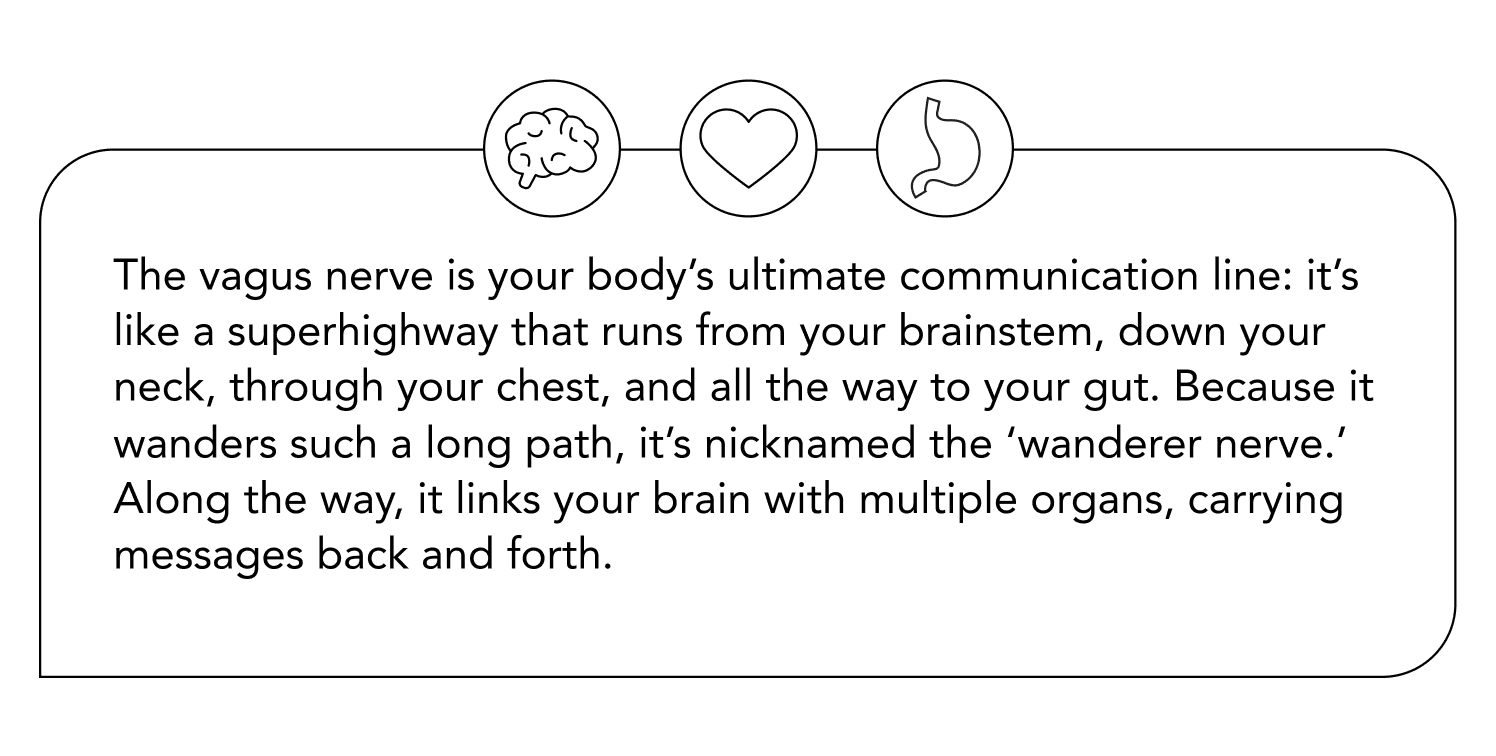
The vagus nerve is your body’s ultimate communication line: “it’s like a superhighway” that runs from your brainstem, down your neck, through your chest, and all the way to your gut, says Hany Demian, MD, an expert in spinal care and anti-ageing. Because it wanders such a long path, it’s nicknamed the "wanderer nerve". Along the way, it links your brain with multiple organs, carrying messages back and forth.
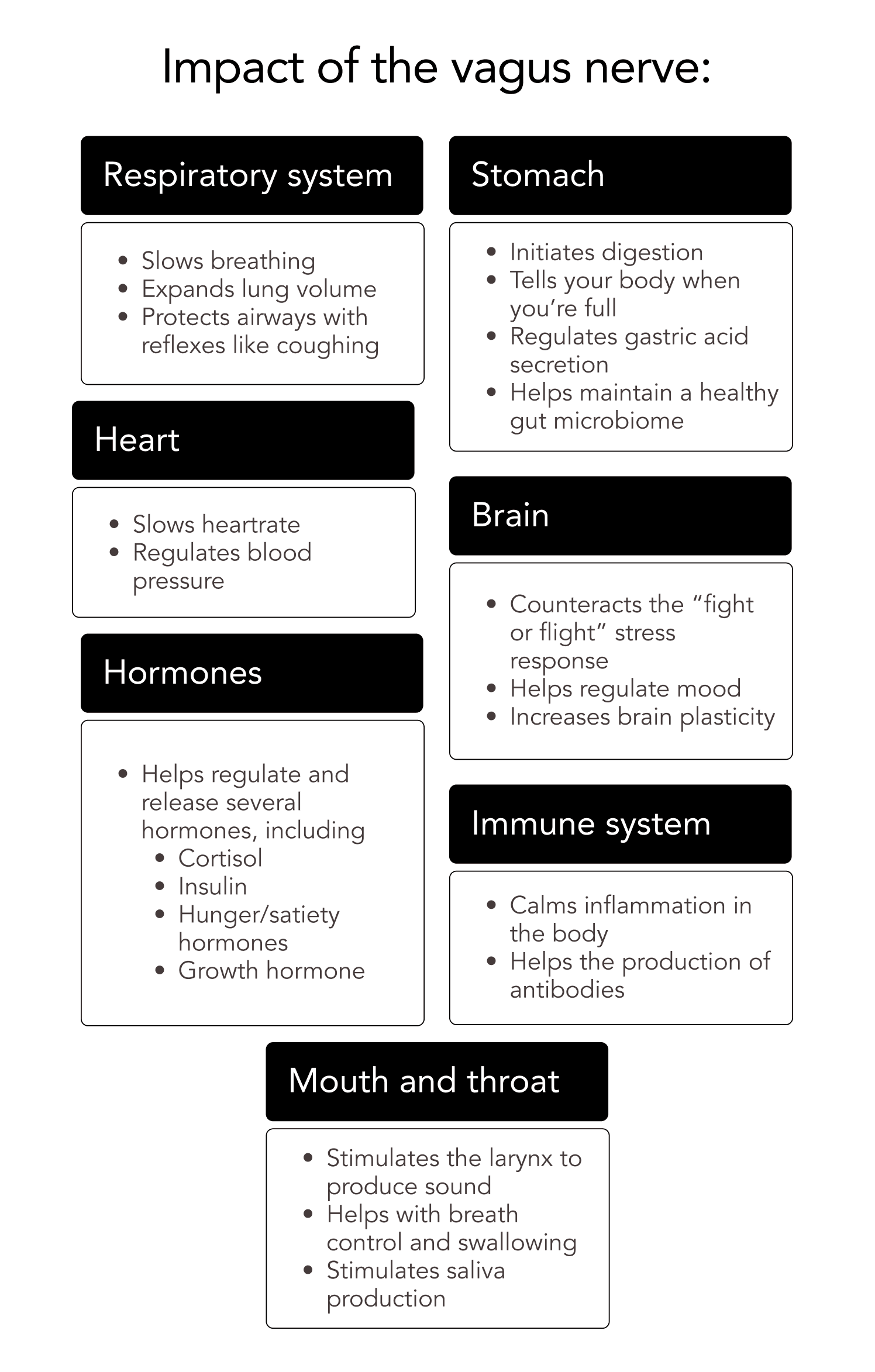
So, what does the vagus nerve do exactly? As the longest cranial nerve and central powerhouse in your parasympathetic nervous system (a.k.a. the “rest and digest” system), the vagus nerve helps regulate digestion, heart rate, and breathing, Dr. Demian says. It also controls reflexes like coughing, swallowing, and sneezing, and influences mood, immune function, and inflammation levels. In other words, it’s not just about keeping your body running: it’s also shaping how you feel.
Because the vagus nerve has such a wide reach — touching everything from your gut to your mood — its strength and responsiveness have a big impact on your overall wellbeing. This is where “vagal tone” comes in: a measure of how active and effective your vagus nerve is.
A strong vagal tone helps you better handle stress, recover faster from it, and keep your body in balance. On the other hand, a weaker vagal tone has been linked to a higher risk for chronic diseases such as rheumatoid arthritis, atherosclerosis, and Crohn's disease.
What is vagus nerve stimulation (VNS)?
Think of vagus nerve stimulation (VNS) as giving your body’s “chill-out” nerve a gentle nudge to work at its best. In medical settings, VNS usually means using a device to send mild electrical impulses to the vagus nerve. But you don’t always need high-tech medical equipment.
There are a few main ways to do vagal stimulation:
- Implantable VNS devices: This is the more invasive, medical-grade approach that’s FDA-approved for epilepsy and treatment-resistant depression. It involves surgically implanting a small stimulator (or “pulse generator”) connected to the left vagus nerve in the neck. The device sends regular, mild pulses to help regulate brain activity. Another FDA-approved device – which delivers electrical signals to the anterior and posterior trunks of the intra-abdominal vagus nerve – has also been studied to treat obesity (though it’s not considered a first-line treatment).
- Non-invasive VNS devices: These skip the surgery. For example, transcutaneous VNS delivers stimulation through the skin of your neck or ear using a handheld device (some are portable for at-home use).
- Natural techniques: You can also stimulate the vagus nerve naturally — no gadgets required — through deep breathing exercises or even certain forms of movement.
How vagus nerve stimulation works
Roughly 80% of the vagus nerve’s fibres carry sensory information from your organs to your brain, while the rest send signals from your brain to your body. By stimulating these pathways (especially through electrical stimulation), VNS can dial up vagal tone and reduce cytokines — i.e. proteins that play a role in your body’s inflammatory processes.
Translation: VNS not only helps calm the nervous system and regulate stress responses, but it may also help reduce inflammation. Chronic inflammation is known to play a role in many diseases, and early research hints that VNS may help with inflammatory-related conditions like stroke, traumatic brain injury (TBI), Crohn’s disease, and lupus.
The benefits of vagus nerve stimulation
The vagus nerve might just be the ultimate multitasker in your body, and stimulating it can unlock some surprising health benefits. Researchers have been studying vagus nerve stimulation for decades. From its proven medical uses to its more experimental, emerging uses, here’s where the science stands.
Vagal nerve stimulation for depression
Originally developed for epilepsy, VNS has also shown promise for people with treatment-resistant depression. The mood-boosting effects likely happen through a mix of brain changes, including:
- Modulating mood-related neurotransmitters like serotonin, noradrenaline, and dopamine via the gut-brain axis (studies show it can increase these monoamines in cerebrospinal fluid)
- Influencing key brain regions involved in emotion, such as the prefrontal cortex and limbic system
- Boosting brain plasticity, as seen in animal studies where it increased brain-derived neurotrophic factor (BDNF)
Like epilepsy, improvements in depression tend to build slowly over time. But for those who respond, the benefits often stick, leading to long-term mood stability and a better quality of life.
Vagal nerve stimulation for anxiety
While depression has been in the spotlight of VNS research, research on the use of VNS for anxiety is also growing. Some evidence suggests that people with anxiety might have a “glitchy” vagus nerve that can’t fully switch off the body’s fight-or-flight mode.
Here’s why that matters: the vagus nerve is a key player in the parasympathetic nervous system, which slows the heart and calms the body after stress. When this system isn’t working properly, the heart rate stays high, the body stays tense, and anxiety lingers.
This shows up as reduced heart rate variability (HRV) — the tiny differences in time between heartbeats. Lower HRV is linked to impaired vagal function, and research suggests stimulating the vagus nerve may help restore balance. In fact, animal models have shown that VNS helped rats unlearn conditioned fears, hinting it could be a powerful partner to exposure therapy for severe anxiety.
Plus, your vagus nerve is also a key messenger in the brain–gut axis — the two-way communication system between your gut and your brain. Stimulating vagal fibres in the gut can influence brain-stem systems tied to mood and anxiety disorders. Early research also suggests that non-invasive ultrasound stimulation of the vagus nerve could offer a side-effect-free way to enhance vagal activity and ease anxiety.
Vagal nerve stimulation for gut problems
Vagus nerve stimulation is showing early promise for gastrointestinal (GI) issues. That’s because the vagus nerve plays a big part in the brain–gut axis, the two-way communication system between your brain and digestive tract.
Scientists believe vagus nerve stimulation affects the gut in multiple ways: it taps into both parasympathetic nerve functions (those “rest-and-digest” signals) and regulates neuroimmune and neuroendocrine systems. Together, these effects can help reduce inflammation and improve gut health.
Small but promising studies have found that VNS may:
- Help people with Crohn’s disease reach remission and lower inflammatory markers
- Reduce abdominal pain and increase complete bowel movements in constipation-predominant irritable bowel syndrome (IBS)
- Improve GI symptom scores in people with Parkinson’s disease
- Ease issues with gastric motility and gastro-oesophageal reflux disease (GERD)
- Relieve nausea, bloating, and early fullness in drug-resistant gastroparesis
- Promote weight loss in people with obesity
While these results are encouraging, more human research is needed before VNS can be widely used for chronic gut problems.
Vagus nerve stimulation for migraines and headaches
If migraines or cluster headaches cloud your life, VNS might one day offer a new tool for relief. Research in this area has mostly focused on non-invasive devices — especially gammaCore, an FDA-cleared handheld unit for the acute and preventive treatment of cluster headaches and the acute treatment of migraines in adults.
GammaCore works by delivering gentle electrical pulses (five 5000 Hz pulses repeated at 25 Hz) through the skin on the side of the neck, stimulating the vagus nerve without surgery. While it’s not a cure-all, some studies show it can help reduce pain and frequency for some headache sufferers.
Vagus nerve stimulation for chronic inflammation
One of the vagus nerve’s most powerful tricks is its ability to dial down inflammation. By modulating immune function and reducing inflammatory cytokines, vagus nerve stimulation has the potential to help with a wide range of conditions where chronic inflammation plays a role.
Early research — mostly small human trials and animal studies — suggests VNS may reduce inflammation linked to:
- Stroke
- Traumatic brain injury (TBI)
- Depression
- Crohn’s disease (with lowered C-reactive protein and calprotectin levels)
- Rheumatoid arthritis (decreased inflammatory markers, less severe disease)
- Systemic lupus erythematosus (lowered plasma levels of Substance P)
While these findings are still preliminary, they highlight VNS’s potential as a treatment that works on the body’s inflammatory pathways rather than just targeting symptoms.
Vagal nerve stimulation for epilepsy
Roughly 20–40% of people newly diagnosed with epilepsy don’t respond to standard treatments. That’s where VNS comes in. FDA-approved since 1997 for partial-onset seizures (aka focal seizures) that resist medicine, this therapy sends gentle electrical pulses through the vagus nerve to help steady the brain’s overactive electrical signals.
For many, it means fewer, shorter, or less severe seizures. For others, it may not help at all. And even when it does work, it’s not instant — benefits can take months (sometimes up to a year) to kick in. That’s why VNS is usually used alongside anti-seizure drugs rather than replacing them.
How to stimulate your vagus nerve naturally
You may not need fancy gadgets to give your vagus nerve a wake-up call. Wondering how to stimulate the vagus nerve from the comfort of your sofa? Plenty of simple, at-home habits can help fire it up and calm your body, including:
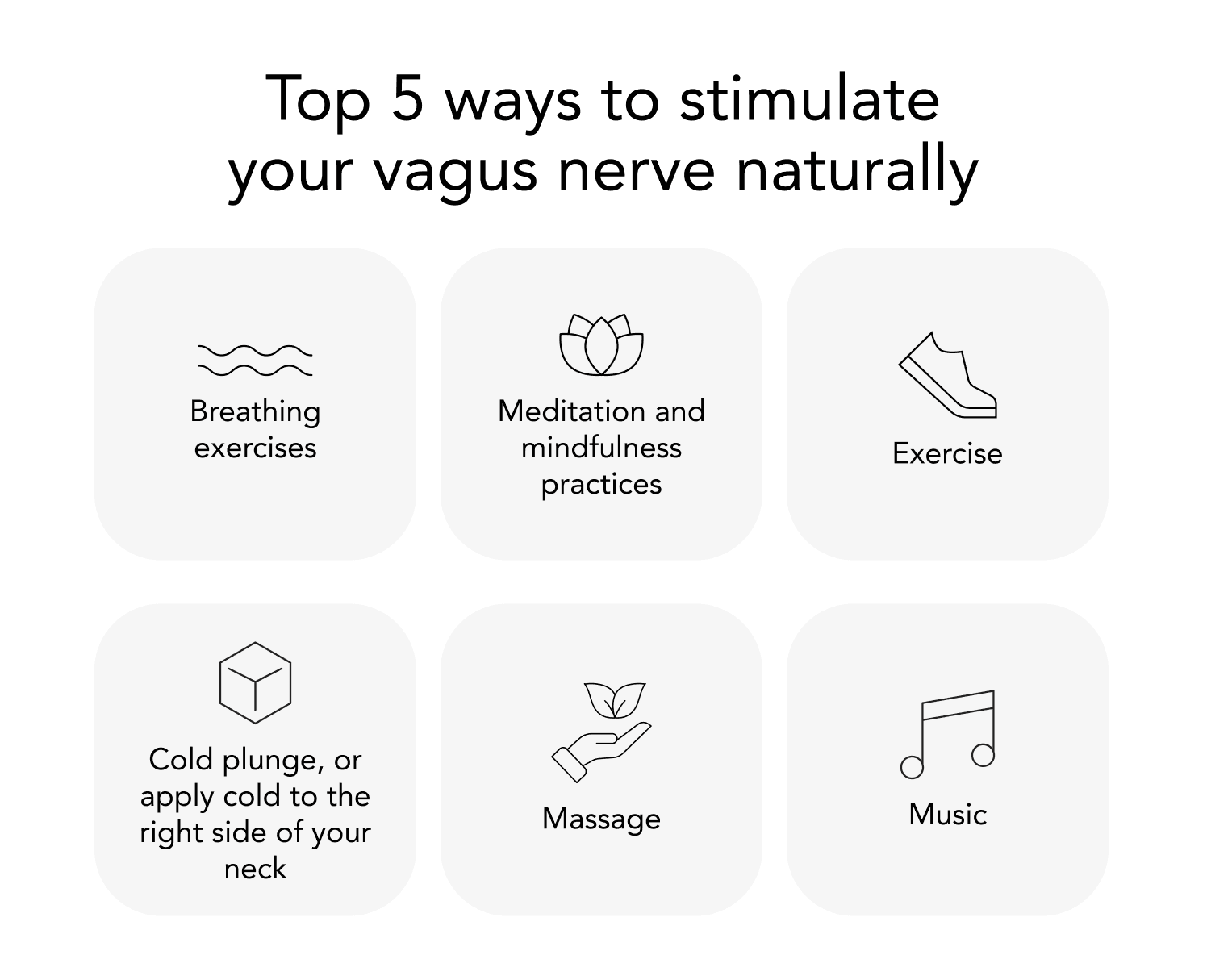
Breathing. Slow, deep belly breathing is one of the easiest ways to impact the vagus nerve.
Practising mindfulness and meditation. Pair breathing with mindfulness or meditation for an extra boost. Research suggests mindful movement like yoga can improve vagal tone and build resilience.
Moving your body. Aerobic exercise — like brisk walking or cycling — may stimulate the vagus nerve. In fact, some studies have found swimming triggers vagal activation. High-intensity interval training may also be a win since some research shows it can improve vagal function and decrease heart rate in people with chronic heart failure.
Getting a (gentle) massage. From your scalp to your toes, massage can nudge the vagus nerve into action. Foot reflexology, for example, has been shown to improve vagus nerve function, lower blood pressure, boost immunity, and even reduce stress and depression in middle-aged women. Skip deep-tissue or painful massages, though — they can trigger the body’s "fight-or-flight” response instead.
Chilling out — literally. Cold exposure, even for a few seconds, can light up vagus nerve pathways and dial down your stress response. Research shows that cooling the right side of your neck increases heart rate variability and lowers heart rate (and may even serve as a possible alternative to vagus nerve stimulation using electrical pulses). A cold shower, splashing your face with icy water, or a brief cold plunge can work, but if you have a heart condition, check with your GP first.
Turning up the tunes. Listening to uplifting music — specifically Mozart’s sonata K448 — has been linked to increased parasympathetic tone, the “rest-and-digest” side of your nervous system.
Something to keep in mind: whether these methods actually help is “extremely individual,” says Dr. Demian. The key is engaging in activities that activate your parasympathetic system and keep your fight-or-flight mode in check — in other words, do whatever personally helps you relax. It’s subjective, and it takes persistence over time to see results, he says.
While these DIY approaches aren’t a replacement for medical care — especially if you have a serious health condition like epilepsy — they’re generally safe for most people. Science is still catching up on exactly how effective they are, but they can be a great way to support your body’s stress response. If you’re unsure, talk to your GP or an expert at The Healf Zone before starting anything new.
Vagus nerve stimulation devices
Once upon a time, vagus nerve stimulation meant going under the knife. The traditional approach involved a surgeon implanting a pacemaker-like device under your chest skin, with wires running up to your left vagus nerve. Effective? Yes. But also invasive, expensive, and not exactly appealing if you’re squeamish about surgery.
Fast-forward a few decades, and VNS has had a serious glow-up. You can now stimulate your vagus nerve without surgery through non-invasive methods like:
- Transcutaneous cervical vagus nerve stimulation (tcVNS): stimulates the nerve through the neck
- Transcutaneous auricular vagus nerve stimulation (taVNS): targets the auricular branch of the vagus nerve (ABVN) via electrodes on the ear
These methods are generally safe, come with minimal side effects, and have some big perks over the old-school version: they’re more affordable, easier to access, and can be self-administered at home. Portable, handheld vagus nerve stimulation devices like Nurosym are already on the market and ready for home use.
But before you drop a few hundred pounds, know this: results may vary. Without precise clinical calibration, you may not get the same benefits seen in research settings, and some product claims can be more hype than science. There’s also not a lot of convincing data to back up the efficacy of these at-home VNS gadgets — at least not yet, says Dr. Demian.
So, while non-invasive VNS is thought to mimic the effects of implanted devices, it’s still uncertain whether the benefits are identical. The good news? For most people, trying it at home poses little risk — just check with your GP or a Healf Zone expert first, especially if you have health conditions or are unsure if it’s right for you.
The risks, side effects, and possible considerations
Like most health interventions, vagus nerve stimulation isn’t totally risk-free. Common (and usually temporary) side effects of implanted devices can include:
- Hoarseness or voice changes
- Coughing or throat tickling
- Shortness of breath
- Neck or throat pain
- Headaches, muscle twitching, or skin tingling
- Digestive issues like nausea, vomiting, or indigestion
- Sleep disturbances
Implanted VNS also may not be safe for people with:
- Only one vagus nerve
- Other ongoing brain stimulation therapies
- Heart arrhythmias or other heart conditions
- Dysautonomias (autonomic nervous system disorders)
- Lung disease or severe asthma
- Stomach or intestinal ulcers
- Vasovagal syncope (fainting)
- Pre-existing hoarseness
- Certain psychiatric conditions (e.g., schizophrenia, schizoaffective disorder, rapid cycling bipolar disorder)
Non-invasive methods tend to be safer, but they’re still not for everyone. When in doubt, talk to your provider or an expert at the Healf Zone before trying any form of VNS — your vagus nerve will thank you.
So, who should consider VNS?
Vagus nerve stimulation isn’t a cure-all, but for the right person, it can be a powerful tool. The FDA has cleared VNS for certain conditions like epilepsy, depression, and migraine or cluster headaches when other treatments aren’t helping enough.
It may also benefit people seeking anxiety or stress relief, those with inflammatory or gut issues, or even generally healthy people wanting a brain boost.
The bottom line
Your vagus nerve is quietly running the show for your body’s calm, balance, and recovery. Perhaps its biggest role — how it tamps down inflammation — is a major win for everything from your heart to your gut.
Whether you’re exploring gentle at-home techniques or considering a medical VNS device, the right approach could help you manage symptoms, stress, and more. Just remember — before you start stimulating your vagus nerve, give your GP a heads-up.
Key takeaways
- The vagus nerve is a major player in your “rest and digest” system, influencing heart rate, digestion, mood, and more.
- You can stimulate it naturally (breathing exercises, meditation, cold exposure, massage, music, exercise) or with medical devices designed for VNS.
- VNS devices — implanted or non-invasive — can help treat conditions like epilepsy, depression, and migraine, but they’re not right for everyone.
- Boosting vagus nerve function may improve resilience, reduce stress, and support overall health.
Frequently asked questions (FAQ’s)
Q: How do you stimulate the vagus nerve?
A: There are a range of ways to stimulate the vagus nerve, from implanted medical devices to at-home and non-invasive devices, as well as natural techniques. Vagus nerve stimulation devices send mild electrical pulses to the nerve (usually via the ear or neck) to help regulate your nervous system, which can be especially helpful for certain medical conditions.
Simple habits can also stimulate the vagus nerve. Try:
- Slow, deep belly breathing (especially with mindfulness or yoga)
- Aerobic exercise like walking, cycling, or swimming
- Gentle massage, especially foot reflexology
- Cold exposure (a splash of icy water, a quick cold shower)
- Listening to Mozart music
Q: What are the symptoms of vagus nerve problems?
A: Issues with vagus nerve function can cause a wide range of symptoms, and because most are non-specific, they’re often tricky to diagnose, says Dr. Demian. Possible signs include:
- Digestive problems: gastroparesis, constipation, diarrhoea
- Heart and blood pressure changes: unusually slow or fast heart rate, erratic blood pressure, fainting (vasovagal syncope)
- Breathing and throat issues: shortness of breath, difficulty swallowing
- Brain and mood symptoms: anxiety, depression, mood swings, poor stress tolerance, brain fog, seizures
- Immune and inflammation problems: chronic illness or persistent inflammation
Q: What are the risks of vagus nerve stimulation?
A: VNS is generally safe, but it’s not risk-free. Implanted devices can cause temporary side effects like hoarseness, coughing, throat discomfort, shortness of breath, headaches, digestive upset, or trouble sleeping. It may not be suitable for people with certain heart, lung, stomach, neurological, or psychiatric conditions.
Non-invasive methods tend to be safer, but they’re still not for everyone, so check with a health professional before starting any treatment.
Q: How to reset the human vagus nerve?
A: Think “rest and digest” mode. You can help support your vagus nerve by:
- Practicing deep, mindful breathing to slow your heart rate and calm your nervous system
- Engaging in relaxation practices like meditation or gentle yoga
- Using cold stimulation to quickly shift your body out of stress mode
- Moving your body, which activates the vagus nerve
For a more targeted reset, a VNS device can deliver gentle electrical impulses to the nerve, helping it reestablish healthy communication with your brain and body.
Q: What is the function of the vagus nerve?
A: The vagus nerve runs from your brainstem down your neck, through your chest, and into your gut, linking your brain with major organs along the way. As the tenth cranial nerve and the MVP of your parasympathetic nervous system (your “rest and digest” mode), it helps regulate:
- Digestion
- Heart rate
- Breathing
It also controls reflexes like coughing, swallowing, and sneezing, and influences mood, immune function, and inflammation. In short: it’s a big deal for both your physical and mental wellbeing.
Q: What happens when the vagus nerve is triggered?
A: When activated, the vagus nerve tells your body to chill out. You may notice:
- Lower heart rate and blood pressure
- Slower, steadier breathing
- Relaxed muscles
- Improved digestion
- A sense of calm and focus



This article is for informational purposes only, even if and regardless of whether it features the advice of physicians and medical practitioners. This article is not, nor is it intended to be, a substitute for professional medical advice, diagnosis, or treatment and should never be relied upon for specific medical advice. The views expressed in this article are the views of the expert and do not necessarily represent the views of Healf
Jaime Osnato is a health journalist and licensed social worker based in NYC. With over a decade of experience writing for top digital health and wellness outlets like Well+Good, SELF, Shape, FitPregnancy, LIVESTRONG.com, and more. Jaime brings insight and integrity to every story.
Living with chronic conditions herself, Jaime believes health information should be clear and understandable - no medical degree required. She's fuelled by a mission to transform complex science into clear, usable guidance. Her goal? To arm readers with trustworthy, evidence-backed knowledge, so they can confidently advocate for their own health.
- 1. What is the vagus nerve and what does it actually do?
- 2. What is vagus nerve stimulation (VNS)?
- 3. How vagus nerve stimulation works
- 4. The benefits of vagus nerve stimulation
- 5. How to stimulate your vagus nerve naturally
- 6. Vagus nerve stimulation devices
- 7. The risks, side effects, and possible considerations
- 8. So, who should consider VNS?
- 9. The bottom line
- 10. Key takeaways
- 11. Frequently asked questions (FAQ’s)