Loading...
The Healf Source
Can You Train Your Brain to Sleep Better?
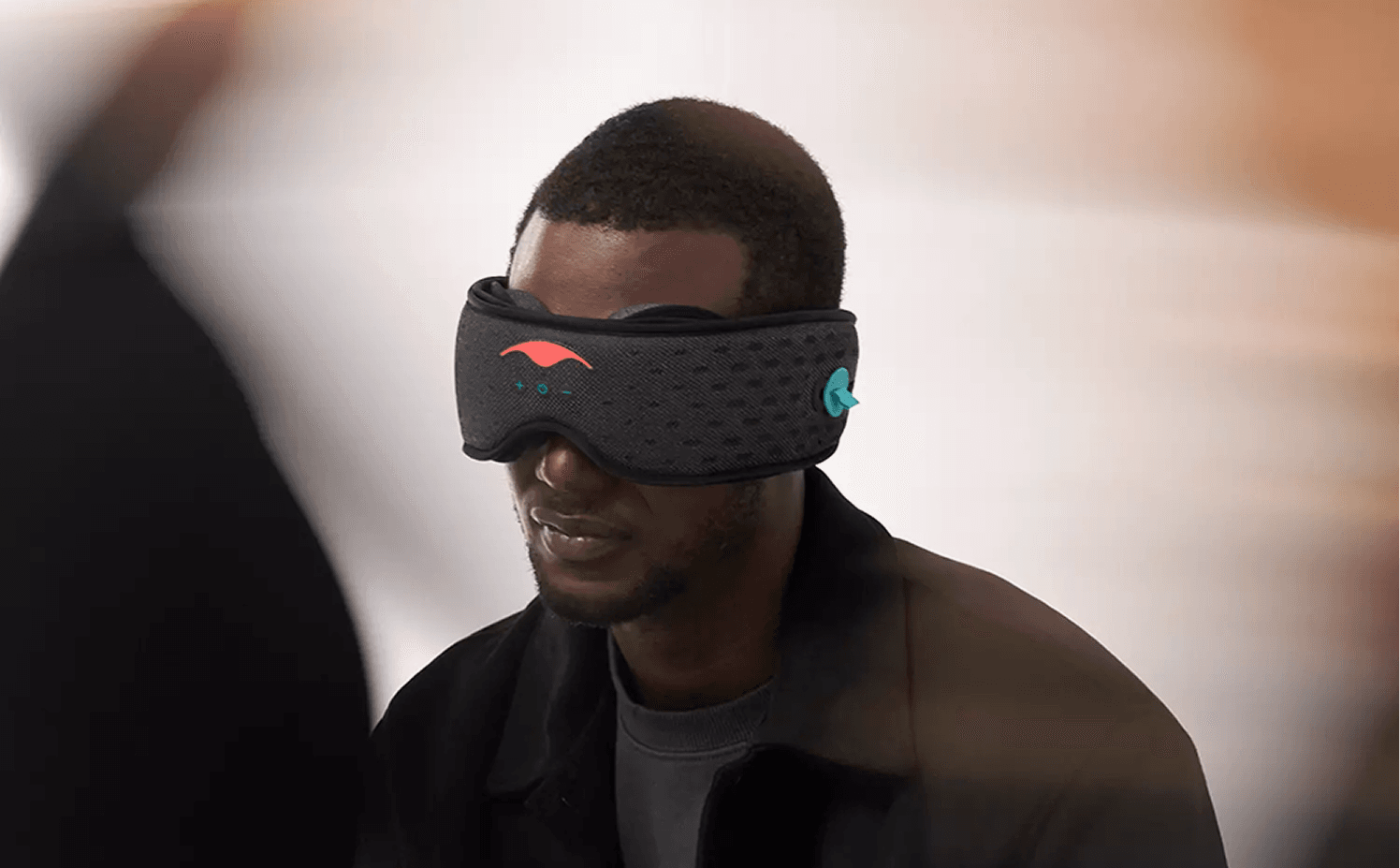
Muse's smart sleep-tracking tech reads your brainwaves directly, all night long, allowing it to work with your brain while you sleep.
_Nick_Fancher_Photos_ID7986%2520(2).jpg&w=3840&q=75)
Written by: Tom Ward
Written on: July 22, 2026
Our sleep is in a bad way. One in five British adults isn't getting their recommended seven to nine hours of shut-eye, according to data from Mental Health UK. With poor sleep negatively impacting everything from mental health and mood to creativity and physical wellbeing, it’s a worrying statistic. It’s no surprise, then, that a range of wearable tech has cropped up, seemingly overnight, and all with the promise of helping you achieve a calmer, more restful night’s sleep.
Yet, not all sleep wearables are created equal. Most sleep technology tracks your sleep, then serves up a sleep score in the morning. Muse's smart sleep tracking tech reads your brainwaves directly, all night long, allowing it to act in real time and work with your brain while you sleep. This turns sleep into something active and trainable across three stages, helping you to fall asleep faster, sleep deeper, and wake clearer. Each stage is literally powered by a dedicated, lab-graded feature, Sleep Assist, Deep Sleep Boost and Smart Wakeup, measuring heart rate, brain waves, and muscle movements.
Muse's futuristic sleep staging models are also aligned with the gold standard medical tool, polysomnography, which is used to diagnosing sleep-related breathing disorders, parasomnias, and neurological conditions, 88 to 96% of the time.
In other words, Muse might be the only sleep tech that can provide a truly accurate sleep reading in your own home, and then take it a step further, help you train yourself to sleep better in real time. Here’s how.
What does it actually mean to "train" your brain to sleep?
The thing about sleep science is that often it can feel like it requires a lot of guesswork. Most wearables and devices say they monitor your brain, movement, and sleep patterns as you sleep, and then deliver up a plethora of numerical data the next morning. But knowing what you should do with all that information is the most important step. The difference here is that while most sleep tech just tracks your sleep, Muse tracks and then trains your brain to sleep better.
Muse S Athena, the first and only sleep tech device that combines EEG and fNIRS technology, literally reads your brainwaves directly using EEG sensors throughout the night, so it can respond to what it records in real time, instead of just serving up a summary when your alarm goes off.
Muse is able to guide your brain and body through three distinct sleep stages, providing an end-to-end sleep system. It starts with the Sleep Assist feature, in which responsive soundscapes adapt to your brain activity as you drift off. In testing, Sleep Assist helped users fall asleep 55% faster*, with a 20% improvement** in reported sleep quality. In this sense, it's literally teaching your mind how to wind down.
What is neurofeedback and how does it improve deep sleep?
Few people realise that improving your sleep actually begins during the day. Neurofeedback captured during the daytime serves up a snapshot of your waking brain state and gradually steers you towards a calmer, more focused state, even while awake. Assisted self-regulation is the key here, and the more you learn how to do it, the more prepared your mind and body will be to enter a deep, restorative rest.
Muse S Athena’s EEG sensors are the second piece of the puzzle, actively monitoring your brainwaves throughout the night. When slow-wave sleep is detected (the deepest and most restorative stage), Deep Sleep Boost uses real-time EEG and AI to deliver precisely timed pink-noise cues, synchronised to your brain’s own slow oscillations. Deep Sleep Boost works with your brain’s natural rhythm, adding gentle sound at exactly the right moment to deepen your most restorative sleep, which is a process called closed-loop acoustic stimulation.
These effects are backed by real data. In a randomized trial, phase-locked acoustic stimulation during slow-wave sleep raised slow-wave activity by close to 50% , and improved overnight memory retention by around 20%. In Muse’s own beta testing, Deep Sleep Boost produced roughly 76% more slow waves occurring within organized trains, meaning less fragmented deep sleep.
Why does the timing of your alarm matter?
No one loves their morning alarm. Set it too early, and you wake up groggy. Snooze too long, and your morning commute suddenly becomes an obstacle course-like race against the clock. Muse’s Smart Wakeup feature can help you avoid both situations. By using gentle, calibrated audio set to come on during light sleep – your brain’s natural sleep exit ramp – you can come back to the waking world with a clearer head, and less of an urge to dive back under the duvet.
Muse’s internal analysis of roughly 6,200 nights found that once you have had enough total sleep, your wake timing becomes the main factor shaping how you feel in the morning. Other alarms guess. Muse knows.
How does EEG-based sleep tracking help improve your sleep?
What sets Muse apart from its competitors is accuracy. Other wrist and ring wearables estimate your sleep stages indirectly, from movement and heart rate. A device that only estimates from your wrist or finger cannot time an action to your brain. Muse reads sleep from the brain, where sleep actually happens, not from the wrist, so it knows which stage you are actually in.
This accuracy has been independently validated. In a 2025 study published in SLEEP Advances (Oxford Academic) by the Canadian Sleep Research Consortium, Muse S sleep staging reached 88 to 96% per-stage agreement with polysomnography, the clinical gold standard, across all sleep stages, with sensitivity of 79 to 92%, and a specificity of 90 to 99%.
What this essentially means is that because Muse knows your real-time sleep stage, it can act at exactly the right moment.
Visit choosemuse.com for more.
*Based on 160 participants and 1,100+ sleep sessions tracked via Muse's Citizen Science Platform.
**2021 study led by Western University, Cambridge Brain Science, Hatch, and Interaxon, using Muse S EEG sleep support technology.
This article is for informational purposes only, even if and regardless of whether it features the advice of physicians and medical practitioners. This article is not, nor is it intended to be, a substitute for professional medical advice, diagnosis, or treatment and should never be relied upon for specific medical advice. The views expressed in this article are the views of the expert and do not necessarily represent the views of Healf
Tom Ward is a former Men's Health features editor, and writes regularly on sports, fitness and adventure for the Red Bulletin, Outside, and the Sunday Times. He is the author of the novels The Lion and The Unicorn, and TIN CAT.
.jpg&w=3840&q=75)